LASIK Alternatives: Find the Best Vision Correction for You
LASIK isn’t the only option for achieving clear vision. This guide compares the leading types of corrective eye surgery so you can choose the best vision correction procedure.
LASIK eye surgery is a quick, precise laser procedure that reshapes the cornea to help you see clearly without glasses or contacts. At SHARPEVISION, all procedures use FDA-cleared, all-laser technology performed by experienced refractive surgeons. Below, explore how LASIK works, what to expect, and whether you may be a good candidate — or book your appointment to get started.
LASIK eye surgery is one of the safest and most effective vision correction procedures available today, and most patients we evaluate are excellent candidates. At SHARPEVISION, about 90% of patients qualify thanks to our advanced diagnostic imaging and FDA-cleared all-laser technology. Even individuals who were previously told they “weren’t candidates” often qualify today because modern corneal mapping and refined surgical techniques allow for safer, broader treatment ranges. If you’re unsure whether LASIK is right for you, our free comprehensive exam will give you a clear, personalized answer.
Dr. Sharpe founded SHARPEVISION MODERN LASIK in 2012 after 16 years of performing LASIK & vision correction procedures. He took the best of everything he’d observed, not just in medicine but in every consumer interaction he had, and translated it into a medical experience unlike any you have ever had. SHARPEVISION only uses the newest laser technology paired with highly trained surgeons, optometrists, and support team to deliver the best possible results. With more than 100,000 laser vision correction procedures performed, our surgeons bring deep experience to every LASIK treatment.
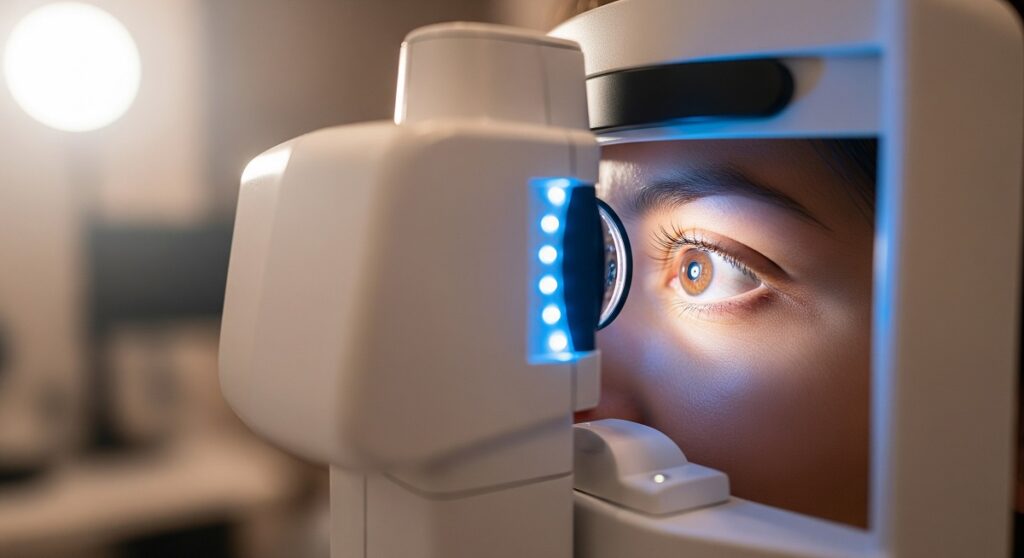
Your comprehensive consultation includes multiple advanced diagnostic tests — from detailed 3-D corneal mapping and thickness measurements to prescription analysis and ocular health screening. Our doctors review every data point to create a fully customized laser treatment plan tailored to your unique eyes. This personalized approach helps optimize your visual clarity while reducing the risk of postoperative issues such as glare, halos, or dry eye symptoms.
SHARPEVISION performs only all-laser LASIK using modern femtosecond and excimer laser systems designed for sub-micron precision. This technology is the same class of all-laser LASIK approved by NASA and the U.S. military for astronauts and pilots, offering exceptional accuracy, safety, and consistency. These advanced platforms help create a smoother corneal surface, enhance safety, and support a faster, more comfortable recovery. All-laser LASIK eliminates the need for older mechanical blade techniques and allows us to deliver more predictable, highly customized results for every patient.
LASIK eye surgery offers long-lasting visual freedom and rapid results. Most patients achieve 20/20 or better vision and return to normal activities within a day. Because the procedure is fully customized—from your corneal measurements to the laser treatment itself—you get a highly precise outcome tailored to your unique eyes.
Additional benefits include:
At SHARPEVISION, every treatment is guided by advanced diagnostic imaging and a fully customized approach, designed to deliver the safest and most accurate version of LASIK available today.
The majority of people -90%- who meet the age and general health requirements are good candidates for LASIK. Take our quiz to see if LASIK is right for you!
A comprehensive, dilated examination is the only way to know which vision correction procedure is best for you. We do this at no charge because we believe so strongly in giving patients all the information necessary to make the right treatment choice. While your exam involves comprehensive diagnostic testing, it is also our opportunity to learn more about you, your expectations & your lifestyle. All of these factors play an important role in recommending the best procedure for you. *Your visit may include dilation of your pupils, which will affect your eyesight for about 4-6 hours, as you may have experienced with a routine eye exam. Dilation is part of a comprehensive examination which is recommended every 1-2 years. If you prefer, we can defer that component, and it will not affect our ability to complete your vision correction consultation or your surgical outcome in any way. It’s a recommendation, not a requirement.
The complete exam can take up to 90 minutes. After all the data is collected, our doctor will examine you, discuss the treatment recommendation, and answer any questions you have.
We’d like you to leave your contacts out for 3 days prior to your treatment. After carefully reading through the entirety of the literature you will receive from your doctor, you will sign a copy of the informed consent in our office prior to the procedure. We’ll explain and give you written instructions for your post-op care, which includes using prescription eye drops for seven days following your procedure. You have the option to purchase the drops in-office (Recovery Kit) or fill the prescription at your pharmacy.
We understand that any eye procedure can be a scary thought, so we’ve worked very hard to make it easy for you. We offer an oral sedative (Valium) to help you relax, and we encourage you to take it if medically appropriate. We want your experience to be as comfortable as possible. All of your post-operative appointments will be scheduled before your procedure, so you can simply go home when the procedure is complete. Your surgeon will talk you through each step of the process, so you’ll know exactly what you will feel, see, and hear. He monitors your eye through the microscope at all times. The entire procedure takes about three minutes per eye. The first laser takes just 20 seconds. The second laser takes only 10-50 seconds, depending on the amount of your prescription. Not bad at all!
Immediately following the procedure, you will notice a change in your vision. It’s always foggy at first, but most people can see well enough to read a clock from across the room. Your eyes will be numb for 15-25 minutes; then they will start to water and burn. After LASIK, this discomfort usually lasts 4-5 hours. To help with the burning, we supply you with “comfort drops” in the Recovery Kit that contain numbing medicine and artificial tears. We will give you a cool compress to put on your eyelids when you leave the clinic, but it’s good to have another one waiting in the fridge at home. They will really help with the discomfort. Try to sleep or rest with your eyes closed. You may resume normal activities the same or following day. You can lift and exercise, but do not rub your eyes! Your vision may still be foggy, but this is a normal part of your healing process and will clear in the days and weeks following the procedure. Most people see well enough to work the next day.
Over the years, we’ve heard many myths about vision correction. We want to set the record straight and answer other common LASIK questions.
Watch Video
If you fall into the small percentage of patients for whom LASIK is not the ideal option, you still have multiple highly effective ways to correct your vision. At SHARPEVISION, we offer several advanced LASIK alternatives that can help you achieve clear, lasting vision, even if you’ve been told elsewhere that you’re not a candidate. Each option is recommended based on your eye anatomy, prescription, age, and long-term visual goals. Our doctors will walk you through every option during your consultation and recommend the safest, most effective procedure for your unique eyes.
PRK offers the same visual outcomes as LASIK but uses a surface-based approach instead of creating a corneal flap. It’s an excellent choice for patients with thinner corneas or certain corneal shapes. Recovery is slightly longer than LASIK, but the long-term results are equally sharp.
Monovision corrects one eye for distance and the other for near vision using all-laser LASIK or PRK. It’s often recommended for patients over 40 who want freedom from reading glasses and is a well-tested, highly successful approach for managing presbyopia.
The EVO ICL™ is a micro-thin, biocompatible lens placed gently behind the iris to correct moderate to severe nearsightedness — with or without astigmatism. It does not remove tissue or alter the cornea, making it ideal for patients with dry eye, thin corneas, or prescriptions too high for LASIK. The lens is removable if ever needed.
RLE replaces your natural lens with a custom multifocal or extended-range lens to improve distance and near vision. It’s typically recommended for patients in their 40s–60s experiencing presbyopia and eliminates the need for cataract surgery later in life.
Cataract surgery permanently removes the cloudy lens and replaces it with a clear, custom Inter Ocular Lens (IOL). This restores brightness and clarity and often reduces or eliminates dependence on glasses. It is also the recommended vision-correction option for patients with advanced lens changes.
Considering LASIK? Here are answers to the questions patients ask most — from candidacy and safety to recovery and cost. Some of them may surprise you!
One of the things that sets SharpeVision apart is that we have every technology available to get you out of glasses, so we don’t have to shoehorn you into a procedure that might not be the best fit for you. The biggest two factors that affect the procedure recommendation and outcomes are: age and amount of prescription. Also important is your anatomy and eye health.
Your age is important, because our eyes go through different stages:
Your prescription amount (degree of nearsightedness) is important for several reasons. The higher the degree of nearsightedness, the more tissue LASIK and PRK removes from your cornea, and each person has a slightly different amount, and limit. At SharpeVision we measure the thickness of your cornea with both sound and light to get a highly accurate measure. LASIK removes tissue from beneath the laser created flap. PRK removes tissue from the surface of your cornea.
Your ocular anatomy is important, in that some people are not LASIK candidates due to the shape and thickness of their cornea. If your cornea has signs of instability, or is too thin, we don’t operate on it. Some people can safely due PRK but not LASIK due to these same factors. Anatomy is also important when considering an Implantable Contact Lens (ICL) because you need adequate room between your natural lens and the back of your cornea to allow an ICL to be implanted.
Your eye health must be excellent to safely perform vision correction surgery. This is a big part of why we perform a free comprehensive exam at SharpeVision.
At SharpeVision, we offer LASIK, PRK, ICL, and IOL. The recommendation depends on your age, prescription amount, anatomy, and other factors. We spend a lot of time making sure you know the what, the why, and the pros and cons of our recommendation.
If your vision is worse after LASIK or PRK than it was before with glasses or contacts, it’s almost always due to dry eyes or residual prescription. Both of these are fixable with time (for dry eyes which is almost always the cause of foggy vision for a month or more after LASIK) or with additional laser to touch it up (which is necessary approximately 1% of the time and free for the first year after surgery).
Of course there are risks associated with every kind of surgery, and laser vision correction is no exception. To put it in perspective, however, the risk of laser vision correction is significantly less than the risks of wearing contact lenses. Yes, you read that correctly. The conclusion of a 2016 article from the academic journal Ophthalmology stated: “Compared with contact lens wear, current LASIK technology improved ease of night driving, did not significantly increase dry eye symptoms, and resulted in higher levels of satisfaction at 1, 2, and 3 years follow-up.” Price MO et al. Ophthalmology. 2016;123(8):1659-1666.
Most insurance/vision plans do not pay towards LASIK or PRK, but we do honor the discount from EyeMed, VSP, and Davis, so that if you’re a member, your out of pocket expense will be the same. Always check with your insurance carrier or health benefits administrator before coming in for your exam. A few forward-thinking companies are currently paying for some or all of their employees’ LASIK, PRK, and ICL including The Bill and Melinda Gates Foundation, Adaptive Biotech, and Zillow in Seattle.
The cost of LASIK eye surgery depends on your prescription, corneal anatomy, and the level of customization recommended for your eyes. At SHARPEVISION, all procedures use advanced all-laser technology and include comprehensive testing, surgeon care, and follow-up visits. Your surgeon will review pricing during your free consultation so you know exactly what to expect — with no hidden fees.
To make LASIK more accessible, we offer flexible financing options for treatment plans over $250. Most patients qualify for affordable monthly payments, and many find that LASIK costs less over time than the combined expenses of glasses and contacts.
Key points to know:
Curious about LASIK eye surgery cost?
You’ll receive a personalized price estimate based on your eye measurements and treatment plan during your free consultation.
LASIK Locations Near You
Choosing the right LASIK provider also means choosing a clinic that’s convenient and close to home. SHARPEVISION offers all-laser LASIK at modern, surgeon-led centers across the U.S., each equipped with advanced diagnostic technology and the same high standards of care.
Select your nearest location to view local pricing, surgeon bios, reviews, and to schedule your free consultation:
Wherever you visit us, you’ll receive the same FDA-cleared technology, transparent guidance, and personalized vision-correction plan built around your eyes.